Female Hair Transplant: An Honest Guide to Hair Loss and Regrowth in Women

On this page
Hair loss in women is far more common than the quiet way we tend to talk about it suggests, and it is often more distressing precisely because it feels unexpected. If you have noticed a wider parting, a thinner ponytail or more strands in the brush and the shower, you are not imagining it, and you are far from alone. Many women move straight to searching for a hair transplant in Turkey hub before anyone has explained what is actually happening on their scalp. The honest, expert view is simple: a transplant is an excellent solution for the right woman, and completely the wrong first move for many others. This guide is written to help you tell which group you are in, before you spend anything.
First, an important point about who we are. Luna Clinic Medical Travel Services is a medical-travel coordinator, not a clinic. We do not perform surgery, we do not employ the surgeons, and we never make clinical decisions or guarantee a clinical or aesthetic outcome. Independent, verified partner surgeons at their own accredited Istanbul clinics assess whether you are suitable, plan your treatment and carry full responsibility for your care and result. What Luna does is coordinate the practical side of the journey: travel, hotel, airport and clinic transfers, and interpreting, so that your only real job is to focus on your care and your decision.
Start with the decision, not the procedure
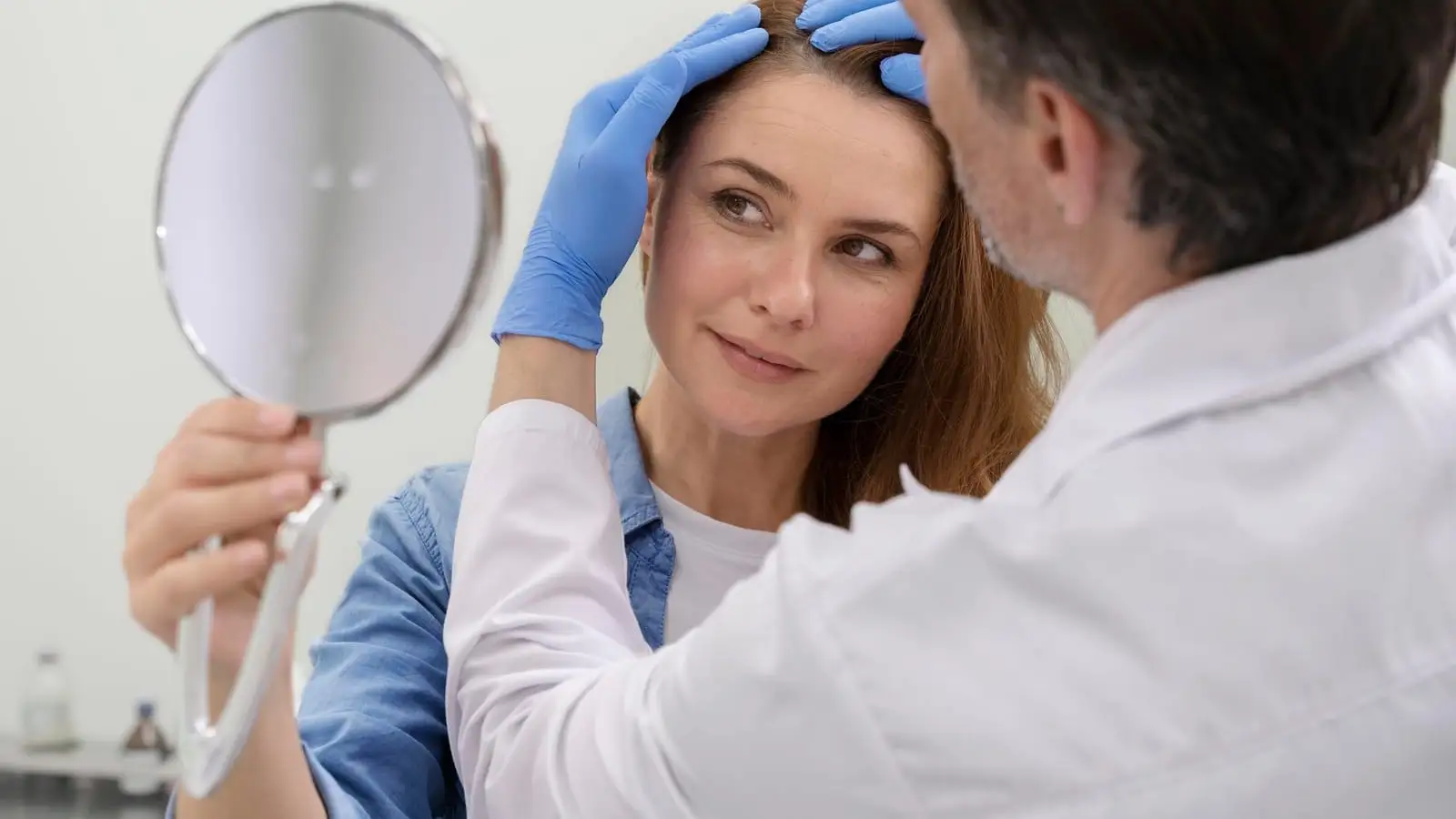
The single most important step in female hair restoration is diagnosis, and it happens before anyone picks up an instrument. A transplant redistributes healthy follicles from a donor zone into a thinning area. It does not treat the reason your hair is falling out. If the underlying cause is active, unstable or diffuse, surgery can waste good donor hair and leave you disappointed. So the first question is never "which technique?" but "why am I losing hair, and is it stable?"
Here is a straightforward way to frame your own situation, though only a surgeon or dermatologist can confirm where you fall:
- Is the loss patterned or diffuse? A localised, patterned loss, such as a receding frontal hairline or a widening central parting, is potentially treatable with surgery. Even, all-over thinning across the entire scalp usually is not.
- Is it stable or actively shedding? Rapid, recent shedding points to a process that needs treating medically first, not transplanting over.
- Is there a healthy donor area? A transplant is only possible if the back and sides of your scalp have enough strong, DHT-resistant follicles to move.
- Has a medical cause been ruled out? Thyroid imbalance, low iron (ferritin), hormonal shifts and certain medications can all thin hair, and are far better corrected than covered up.
If the honest answer is "patterned, stable, good donor, cause investigated," you are in transplant territory. If not, the smartest money you can spend is on a proper diagnosis first.
The common causes of female hair loss
Understanding your type of loss tells you whether a procedure is even relevant. These are the causes a good surgeon or dermatologist will consider, and notice how many are either temporary or treatable at the source.
Female-pattern (androgenetic) hair loss
This is the most common form and the one most likely to benefit from surgery. It typically shows as a widening parting and gradual thinning across the crown, while the frontal hairline is often relatively preserved. Because it tends to be patterned and comparatively stable, it can be a strong candidate for transplantation once density and donor supply have been assessed. It is influenced by genetics and hormones, and it tends to be progressive, which is why maintenance matters.
Telogen effluvium
This is a diffuse, usually temporary shedding triggered by a shock to the body: illness, surgery, crash dieting, severe stress or childbirth, with postpartum shedding a classic example. The key word is temporary. Hair usually recovers on its own once the trigger passes, so a transplant here is both unnecessary and unwise.
Traction alopecia
Caused by years of tight styling, braids, extensions or tight ponytails pulling on the follicles, often along the hairline and temples. If caught early and the tension is removed, hair can recover. In long-standing cases where the follicles have scarred and settled, a transplant can genuinely help restore the hairline.
Hormonal, thyroid and iron-related loss
An underactive or overactive thyroid, low ferritin (iron stores), polycystic ovary syndrome and menopause-related hormonal change can all thin the hair. These respond to treating the root cause, not to surgery. A simple set of blood tests can be transformative here, which is exactly why diagnosis comes first.
Why non-surgical options often come first
A responsible surgeon is not trying to sell you an operation, and the best ones will often suggest you try medical treatment first, either instead of or alongside a future transplant. Depending on the diagnosis, common first-line options include the following.
- Treating the underlying cause: correcting low iron, managing a thyroid condition or reviewing a medication can, on its own, stop the shedding and allow natural regrowth.
- Topical minoxidil: a well-studied treatment that can slow shedding and thicken existing hair in female-pattern loss. It needs consistent, long-term use to keep the benefit, and any shedding when you start is usually temporary.
- PRP (platelet-rich plasma): injections prepared from your own blood, used by some clinicians to support existing follicles. It works best as a maintenance and enhancement tool, often alongside other treatments rather than instead of them.
A note on finasteride: it is generally not advised for women who could become pregnant, because of the risk to a developing baby, and its role in women is more limited and less clearly established than in men. It is strictly a prescriber's decision made case by case, and no hair medication should ever be started without a qualified doctor guiding you. The point of these options is simple: if your hair can be helped without surgery, that is the better path, and it also protects any transplant you might have later.
Candidacy and the donor area for women
When a transplant is appropriate, everything depends on your donor area, usually the hair at the back and sides of the head. These follicles are naturally more resistant to DHT, the hormone-related factor behind pattern loss, which is why they tend to keep growing once relocated. A woman tends to be a strong candidate when this zone is dense and stable, when the thinning is patterned rather than universal, and when her expectations are realistic.
Women who are often suitable include those with a receded or thinning frontal hairline, a widened parting they want reinforced, thinning at the temples, or a settled, scarred hairline from long-standing traction alopecia. Women who are usually not suitable, at least for now, include those with genuinely diffuse thinning everywhere, active unexplained shedding, or a weak donor area. Because many women have diffuse thinning that also affects the donor region, careful assessment matters even more than it does for men. This is the kind of judgement that belongs with an experienced surgeon who has seen your scalp in person or through detailed photographs, not with a checklist or an advert.
The female-friendly technique: no-shave, long-hair FUE and DHI
Understandably, one of the biggest worries women have is the fear of a shaved head. For most female cases, this simply is not necessary. Experienced surgeons frequently use a no-shave or partial-shave technique, where only a small, hidden section of the donor area is trimmed and the longer hair above covers it completely, while the recipient area is generally not shaved at all. You keep your length and can often travel home without any obvious sign that anything has been done.
The two core methods are worth understanding. With FUE hair transplant, individual follicular units are extracted one by one from the donor area and implanted into tiny channels in the thinning zone; it is minimally invasive and leaves no linear scar. With DHI hair transplant, a specialised implanter pen places each follicle directly, giving the surgeon very fine control over angle, direction and density, which can be particularly valuable along a delicate female hairline and parting. Neither is universally "better." The right choice depends on your hair, the area being treated and, above all, the surgeon's judgement and experience, not a menu you order from. Seeing genuine before and after results from real female patients is one of the more useful ways to understand what a realistic outcome looks like for your type of hair.
A realistic timeline and what results really look like
Managing expectations is not marketing softness, it is the difference between being calm and being anxious in month two. Hair grows on a biological schedule that no clinic can speed up, and the process tends to look worse before it looks better.
- Weeks 2 to 4: the transplanted hairs shed. This "shock loss" is normal and expected, not a failure, though it can be unsettling if no one has warned you. The follicles remain safely in place beneath the skin.
- Months 3 to 4: new growth begins to appear from the transplanted follicles, often fine and wispy at first.
- Months 6 to 9: density builds noticeably and the new hair thickens and matures, so the change becomes visible to you and others.
- Months 12 to 18: the result reaches near-final maturity, with the transplanted hair blended into your existing hair.
There is one truth every honest surgeon states clearly: transplanted follicles keep their DHT resistance, but your native, untransplanted hair can carry on thinning over the years, especially in female-pattern loss. That means the overall look can change with time, no one can guarantee a fixed final density, and ongoing medical maintenance is often recommended to help protect the hair you were born with. A good result is realistic, natural-looking improvement, not a promise of a full head of hair forever.
Non-surgical care versus a transplant, at a glance
| Consideration | Medical treatment (minoxidil, PRP, treating the cause) | Hair transplant (FUE / DHI) |
|---|---|---|
| Best for | Diffuse or early thinning, unstable or recent loss | Stable, patterned loss with a healthy donor area |
| What it does | Slows shedding, supports and thickens existing hair | Physically relocates DHT-resistant follicles to thin areas |
| Ongoing effort | Continuous, benefit fades if stopped | One-off procedure, though maintenance is often advised |
| Timeline | Gradual over months, must be kept up | Regrowth from 3 to 4 months, near-final at 12 to 18 |
| Guarantee | No, results vary by person and cause | No, native hair can keep thinning around it |
Choosing a surgeon, not a hair mill
If you take one practical lesson from this guide, let it be this: choose the surgeon, not the advert. The single biggest quality difference in this field is between genuinely surgeon-led care and high-volume "hair mills" where much of the work is left to technicians with minimal oversight. For women in particular, hairline design and parting density are an art as much as a technique, and that judgement should sit with an experienced surgeon.
When you research, look for a named, verified surgeon, a proper consultation that assesses your donor area and medical history, honesty about whether you are even a candidate, and realistic talk about results rather than glossy guarantees. Ask who actually performs the procedure, and if you cannot get a straight answer, keep looking. Preparing well helps too, so it is worth reading a proper hair transplant pre-op guide before you travel and following your surgeon's aftercare instructions closely once you are home.
How Luna coordinates your trip
If you decide, together with a surgeon, that a procedure is right for you, this is where Luna fits in. We connect you with independent, verified partner surgeons at accredited Istanbul clinics, and once they have assessed you and confirmed your plan, we handle the logistics: your hotel, airport and clinic transfers, scheduling and interpreting so nothing is lost in translation. We do not perform the surgery or make the clinical calls, and we never guarantee a result. What we do is remove the friction of arranging medical travel abroad, so you can concentrate on your care.
On cost, here is a single honest benchmark to anchor your planning. An all-inclusive women's hair transplant with Luna's independent partner surgeons starts from about 2,000 EUR, with the exact price decided by the surgeon after assessing your donor area and the number of grafts you need, while comparable private work at home is often roughly 6,000 to 10,000 EUR or more. A transplant can be genuinely life-changing for a woman with stable, patterned loss and a strong donor area, and the modern no-shave approach means you never have to sacrifice your length to have it.
But it is not the right first step for everyone, and the honest path always starts with diagnosis. The full picture for women, including what is included and how booking works, lives on our dedicated women's hair transplant in Turkey page. When you are ready, you can request a free, no-obligation quote and let a qualified surgeon tell you honestly whether a transplant is right for you. Whatever the answer, understanding your own hair loss is never a wasted step.
Sources & references

Kubilay Aydeğer leads and reviews Luna Clinic Medical Travel’s patient content, pairing senior medical-writing and digital-marketing experience with a doctor-reviewed process so people planning treatment abroad get clear, accurate guidance.

Plastic, Reconstructive & Aesthetic Surgery Specialist · Istanbul
Last reviewed
Indicative only. Your surgeon confirms suitability, technique and price after consultation. No outcome is guaranteed.
Frequently Asked Questions
Can women have a hair transplant?
Yes, many women are treated successfully, but not every woman is a suitable candidate. It works best when the loss follows a stable pattern, such as a widening parting or a receded frontal hairline, and when there is a healthy donor area at the back of the scalp. Women with sudden or diffuse shedding across the whole scalp are usually advised to have the cause diagnosed and treated first. Only a qualified surgeon can decide after examining your scalp.
Do women need to shave their head for a hair transplant?
Not usually. Many partner surgeons offer a no-shave or partial-shave technique for women, where only a small hidden section of the donor area is trimmed and covered by the hair above it. This lets you keep most of your length and return to daily life more discreetly. Whether it is possible depends on the number of grafts needed and the surgeon's assessment on the day.
What causes hair loss in women?
Common causes include female-pattern (androgenetic) hair loss, telogen effluvium after stress, illness or childbirth, traction alopecia from tight styling, and medical factors such as thyroid problems, low iron or hormonal changes. Because the causes are so different and many are treatable without surgery, a proper diagnosis is the single most important step before any transplant is considered.
Is a hair transplant permanent for women?
The transplanted follicles are taken from a DHT-resistant zone, so they tend to keep growing for life. However, a transplant does not stop your original, non-transplanted hair from thinning over time, particularly in female-pattern loss. This is why no reputable surgeon guarantees a fixed density, and why ongoing medical treatment is often recommended to help protect the hair you still have.
Why is finasteride not usually prescribed for women?
Finasteride is generally avoided in women who could become pregnant because of the risk of harm to a developing baby, and its benefit in women is less clear than in men. Doctors more commonly reach for topical minoxidil, PRP or treatment of an underlying cause instead. Any decision about medication is strictly for a qualified prescriber who knows your full medical history.
How long does it take to see results after a female hair transplant?
Patience is essential. Most transplanted hairs shed within the first 2 to 4 weeks, which is normal shock loss and not a failure. New growth usually begins around 3 to 4 months, thickens noticeably through 6 to 9 months, and reaches a near-final result at roughly 12 to 18 months. The timeline is a biological process that cannot be rushed.
Is minoxidil or PRP better than a transplant for women?
They are not competitors, they are different tools. Minoxidil and PRP aim to slow shedding and thicken existing hair, and they are often the right first step, especially for diffuse or early thinning. A transplant physically relocates follicles to restore a specific area and suits stable, patterned loss. Many women end up combining a procedure with ongoing medical maintenance, on the advice of their doctor.
How much does a women's hair transplant in Turkey cost?
With Luna's independent partner surgeons, an all-inclusive women's hair transplant starts from about 2,000 EUR, with the final figure decided by the surgeon after assessing your donor area and the grafts required. Comparable private work at home is often roughly 6,000 to 10,000 EUR or more. You can request a personalised, no-obligation quote before committing to anything.
Find out if a transplant is right for you
Send a few photos and your questions, and an independent partner surgeon in Istanbul will assess your donor area and suitability. Get a free, no-obligation quote with a realistic plan and price, while Luna coordinates your travel, hotel, transfers and interpreting.