Dental Crowns in Turkey: Cost & Partner Dentists in Istanbul
Dental crowns in Turkey with independent, experienced partner dentists in Istanbul, from €150 per crown. Your dentist plans and fits your crown at their own accredited clinic; Luna coordinates the journey from first enquiry to home.
 Written by Sedef Özdemir

Dt. Mine Helvacıoğlu Özkardeş is a Prosthetic Dentistry specialist in Şişli, Istanbul, with a clinical focus on aesthetic dentistry, smile design and prosthetic and implant-supported restorations. She is an independent partner dentist affiliated with Luna Clinic Medical Travel Services; she reviews this page for medical accuracy, carries out all clinical decisions at her own clinic, and does not guarantee individual outcomes.
Last reviewed
An independent partner specialist who may treat patients Luna introduces.
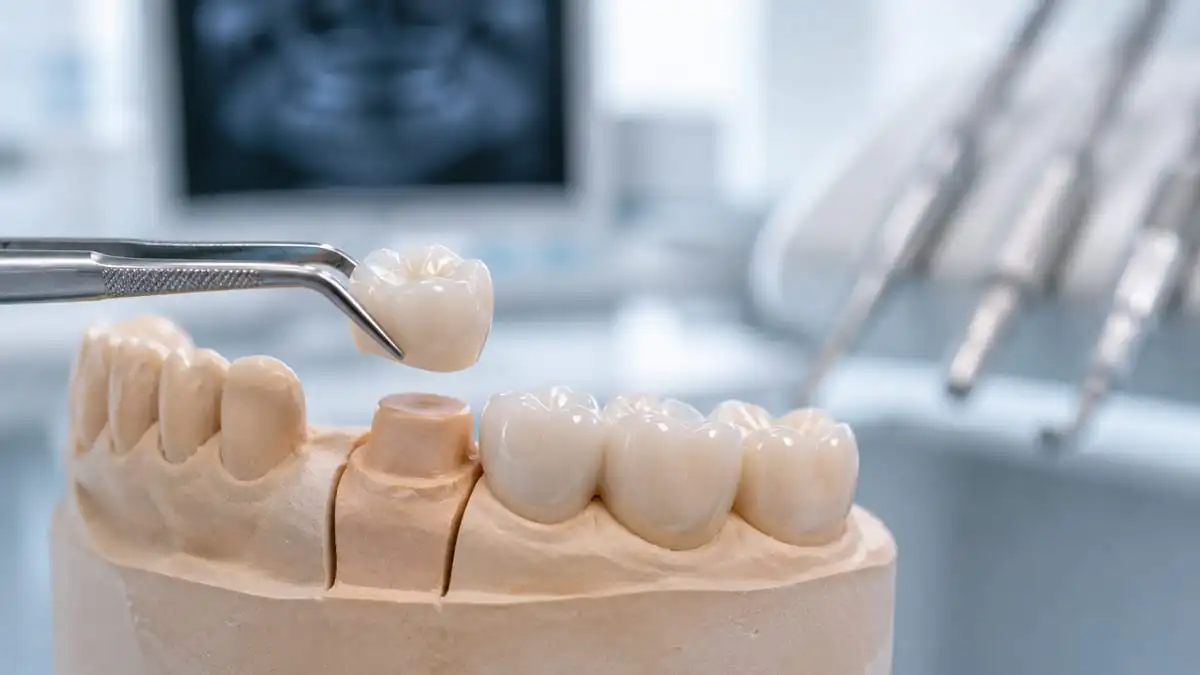
Dental crowns are one of the most common restorative treatments in dentistry, used to restore the shape, strength and appearance of a damaged, weakened or heavily restored tooth. A crown is a custom-made cap that fits over the whole tooth. Through Luna Clinic Medical Travel Services, you access experienced partner dentists in Istanbul for dental crowns in Turkey from €150 per crown, a fraction of UK private prices where the same crown often costs £600 to £1,200.
Choosing the right crown material matters, because it affects both function and how natural your smile looks. Dentists work with zirconia, all-ceramic porcelain, porcelain-fused-to-metal and full-metal alloys, selecting the material based on the tooth’s position, how visible it is when you smile, the colour of surrounding teeth and the chewing forces it must withstand. Turkey has become a leading destination for crowns thanks to skilled restorative dentists, certified laboratories and CAD/CAM technology.
Luna Clinic Medical Travel Services is a medical travel coordination company: we introduce patients to independent partner dentists whose qualifications and clinic standards can be reviewed before you travel. Every clinical decision, from crown material to whether a root canal is needed first, is made by your partner dentist at their own accredited clinic. Luna coordinates your accommodation, transfers, interpretation and aftercare, and does not perform treatment or guarantee outcomes.
Cost comparison: Turkey vs the UK
| Location | Typical price | What is included |
|---|---|---|
| Turkey (Istanbul, Luna partner surgeons) | from €150 per crown | Procedure, hotel, transfers, interpreter |
| United Kingdom | £600-£1,200 per crown | Procedure only |
Indicative prices, last checked in July 2026. Turkey figures are starting prices quoted in euro by independent partner surgeons and cover the items listed. UK figures are typical private prices in pounds sterling and are shown for comparison only. Your surgeon sets the final price after assessment.
Compare 50 procedures in the Turkey Treatment Cost Report 2026
How much does a dental crown cost in Turkey?
A dental crown in Turkey costs from €150 per crown through Luna’s partner clinics, depending on the material and the position of the tooth. By comparison, a private crown in the UK typically costs £600 to £1,200. That is roughly 70% to 85% less for the same internationally certified materials.
The saving is structural, not a quality compromise: lower clinic running costs, lower lab and labour costs, health tourism incentives and a favourable exchange rate. Luna presents the dentist’s medical fee and the travel coordination fee side by side, so you can compare like for like with home-country pricing. Your dentist confirms the final written quote before you fly, with no hidden lab fees on fitting day.
- Crown material. Zirconia, all-ceramic porcelain, porcelain-fused-to-metal and full-metal crowns carry different costs and lifespans.
- Tooth position and case. A visible front-tooth crown, a molar or a case needing a root canal or a build-up first each affect the total.
- Dentist experience. Experienced restorative dentists and prosthodontists typically charge more for their expertise.
- Facility and lab. Accredited clinics, certified dental laboratories and the length of your Istanbul stay influence the package price.
Dental crowns Turkey all-inclusive package: what Luna coordinates
Crown fitting usually takes two appointments across a short stay in Istanbul, so your travel and logistics matter. A Luna-coordinated dental crown trip includes:
- Experienced restorative dentist confirmed before arrival, with credentials provided in advance
- Dedicated bilingual patient coordinator from first enquiry to final remote check-in
- VIP airport transfers on arrival and departure
- Hotel accommodation for your full stay in Istanbul
- Full diagnostic consultation with an oral examination and X-rays
- Tooth preparation, bite registration and precise impressions for the lab
- Lab fabrication of your custom crown, with temporary and permanent crowns fitted
- Post-treatment medications and a final follow-up before you fly home
- Structured remote aftercare if a crown loosens or needs adjustment once you are home
Dental crowns in Turkey cost from €150 per crown with full cost transparency and no hidden laboratory fees. Clinical treatment and aftercare are provided by your partner dentist, not by Luna. Your dentist provides the final quote after consultation.
Types of dental crowns
Your partner dentist recommends the crown material that fits the tooth, your bite and your aesthetic priority. The main types are:
- Zirconia crowns
- Extremely strong and naturally white, increasingly the modern standard, suitable for both front teeth and molars.
- All-ceramic or all-porcelain crowns
- The best aesthetics and natural translucency, ideal for highly visible front teeth and for patients with metal sensitivities.
- Porcelain-fused-to-metal (PFM) crowns
- A strong metal base with a natural-looking porcelain overlay, durable and versatile, though a dark line can occasionally show at the gum.
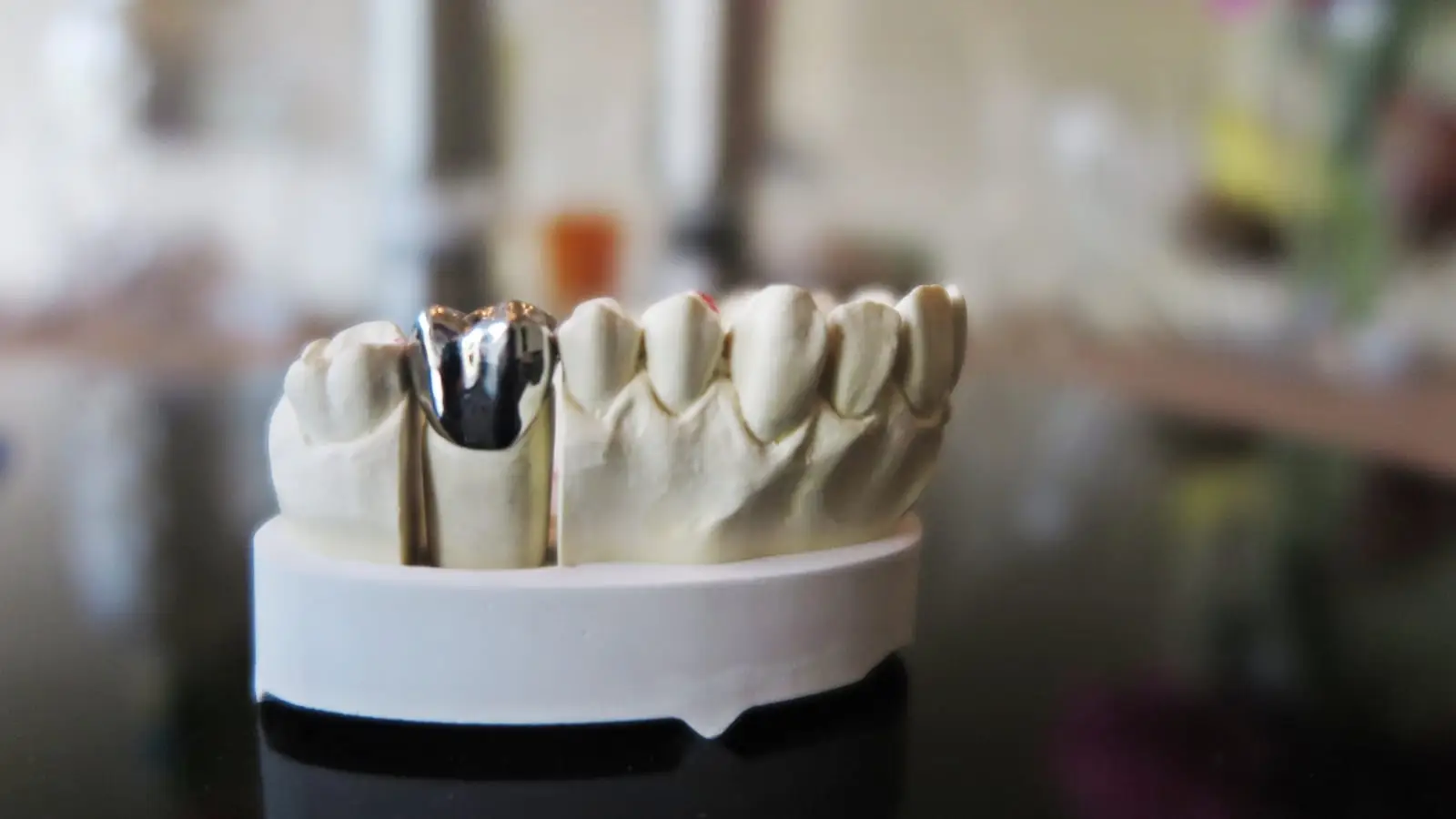
- Metal crowns (gold and alloys)
- Exceptionally strong and wear-resistant with minimal tooth reduction, best suited to hidden molars where chewing forces are greatest.
Dental crown Turkey recovery time
Recovery from a crown is usually quick and straightforward. Your dentist confirms your individual timeline; the general trajectory is:
- 1 weekMild sensitivity to hot and cold and slight gum tenderness are common as the tooth adjusts. Gentle brushing and flossing keep the area clean.
- 3 weeksSensitivity decreases and the crowned tooth feels more natural. You can gradually reintroduce a normal diet while avoiding very hard or sticky foods.
- 4 weeksThe crown is fully integrated, sensitivity has gone, and you can eat and drink normally with a correctly aligned bite.
- 3 monthsThe crown functions like a natural tooth, providing stability and protection to the underlying tooth structure.
- 10-20 yearsWith good care, crowns typically last 10 to 15 years, and high-quality zirconia or gold crowns can last 20 years or more.
Dental crown results and success rate
Dental crowns are highly effective and reliable: clinical studies indicate a success rate of approximately 95% over ten years, with patient satisfaction commonly reported at 90% to 95%. Most patients enjoy long-term benefits with minimal complications, restoring both the function and the appearance of a damaged tooth.
Crowns in Turkey are safe when fitted at an accredited clinic by a qualified dentist using certified materials made in a regulated laboratory. Risk rises at budget clinics that over-prepare healthy teeth or rush the fitting. Through Luna’s partner clinics, your case is planned by an experienced restorative dentist using diagnostic imaging, with the laboratory and material specified in writing before you travel.
Am I a good candidate for a dental crown?
Only the independent partner dentist you consult can confirm suitability after an examination and X-rays. In general, good candidates have a large cavity, a discoloured, cracked or damaged tooth, a tooth restored after root canal treatment that needs protecting, or a tooth they want to improve cosmetically.
A root canal is not always needed; it is only required if the tooth’s nerve is damaged or infected, and around 30% to 40% of crown patients need one first. Roughly 2 millimetres of healthy tooth structure is needed to anchor a crown, and if too much tooth is missing your dentist may build it up or discuss whether an implant is the better option.
Why patients choose Luna Clinic Medical Travel
Verifiable partner surgeons
We only introduce patients to surgeons whose board certification and society memberships can be independently verified.
Clinical decisions stay with your surgeon
Suitability, technique, the procedure and clinical aftercare are handled by your partner surgeon at their own accredited facility.
One coordinator, start to home
A bilingual Luna coordinator handles flight guidance, accommodation, transfers, interpretation and communication with your surgeon.
Transparent, separate quotes
Your surgeon quotes the medical fee; Luna quotes travel coordination separately. You see both side by side, with no hidden costs.
What to expect on your journey
From your first assessment in Istanbul to recovery back home. Clinical steps are carried out by your independent partner surgeon; Luna coordinates the travel around them.
-
Consultation & assessment
Your independent partner surgeon reviews your goals, health and anatomy and confirms whether the treatment is right for you.
-
Personalised treatment plan
Technique, timing and what to expect are planned around your case, with a clear, itemised quote before you travel.
-
Your procedure in Istanbul
Luna coordinates transfers, accommodation and interpretation; your surgeon carries out the treatment at their accredited facility.
-
Recovery & follow-up at home
You return home with a clear recovery plan; Luna keeps you connected to your surgeon for follow-up communication.
Reviewing before-and-after results is an important step when choosing a surgeon. Where available, before-and-after images are sourced from the partner surgeon’s own practice, shown as examples only, and do not guarantee a similar result for your case.
Get a personalised quote
Tell us your goals and we will introduce you to the right independent partner surgeon in Istanbul, then coordinate every step.
- No obligation, free of charge
- Reply from a bilingual patient coordinator
- Clear, itemised quote before you travel
Thank you, your enquiry is on its way.
A bilingual Luna patient coordinator will get back to you shortly. We coordinate your travel; your independent partner surgeon makes every clinical decision.
Frequently Asked Questions
How much does a dental crown cost in Turkey?
A dental crown through Luna’s partner clinics costs from €150 per crown, depending on the material chosen (porcelain, zirconia, porcelain-fused-to-metal or full metal) and the position of the tooth. By comparison, a private crown in the UK typically costs £600 to £1,200. Your full quote is fixed in writing before you travel, with no hidden lab fees on fitting day.
Are dental crowns in Turkey safe?
Crowns in Turkey are safe when fitted at an accredited clinic by a qualified dentist using certified ceramic, zirconia or metal materials made in a regulated dental laboratory. Risk rises at budget clinics that over-prepare healthy teeth, use poor lab work or rush the fitting. Through Luna’s partner clinics, your case is planned by an experienced restorative dentist using diagnostic imaging, with the lab and material specified in writing before you travel.
Why are dental crowns cheaper in Turkey than in the UK?
The price difference is structural, not a quality compromise. Lower clinic running costs, lower lab and labour costs, health tourism incentives and a favourable exchange rate mean Turkish clinics charge roughly 70% to 85% less than UK private dentists for the same internationally certified materials. A private crown in the UK typically costs £600 to £1,200; the same crown in Turkey starts from €150. The saving comes from operating costs, not from cutting corners.
What types of dental crowns are available: porcelain, zirconia, PFM or metal?
Zirconia is extremely strong and naturally white, increasingly the modern standard; all-ceramic or porcelain gives the best aesthetics and is ideal for front teeth; porcelain-fused-to-metal is durable with a natural appearance but can show a dark gum line; and full-metal alloys including gold are the strongest and longest-lasting but visible, so are used on hidden molars. Your dentist recommends the best material based on the tooth’s location, bite force and your aesthetic priority.
How is a dental crown fitted and how long does it take?
Crown fitting takes two appointments over about 5 to 7 days. At the first visit your dentist numbs the area with local anaesthesia, removes any decay, reshapes the tooth and takes a digital scan or impression. A temporary crown protects the tooth while the lab fabricates the permanent one over 3 to 4 days. The second visit covers fitting, bite adjustment and bonding the permanent crown with dental cement.
Will I need a root canal before getting a crown?
Not always. A root canal is only needed if the tooth’s nerve is damaged or infected, for example with severe decay, a deep crack or persistent pain. If the tooth structure is healthy and intact, a crown can be fitted directly with no root canal. Your dentist assesses this with X-rays during your consultation, and around 30% to 40% of crown patients need a root canal first.
Is getting a dental crown painful, and how long do crowns last?
The procedure is not painful because it is performed under local anaesthesia, so you feel pressure but no pain during preparation or fitting. Mild sensitivity to hot, cold or biting pressure is normal for 2 to 7 days and eases with over-the-counter painkillers. With proper care, crowns typically last 10 to 15 years, and high-quality zirconia or gold crowns can last 20 years or more with twice-daily brushing, daily flossing and six-monthly check-ups.
What does Luna arrange, and what if my crown comes loose after I return home?
Luna coordinates the travel side: VIP airport transfers, hotel accommodation, scheduling, interpretation and follow-up communication. Your partner dentist arranges and quotes the consultation, preparation, lab fabrication, fitting and clinical aftercare directly, and we present both quotes together. If your crown becomes loose, falls out or chips after you return home, you contact your coordinator, who arranges a clinical report for your local dentist for minor work such as re-cementing, or coordinates a return visit where corrective treatment is required.
Partner surgeons for this treatment
Independent partner surgeons in Istanbul whom international patients see for this procedure. Luna Clinic Medical Travel Services coordinates your travel while your surgeon makes every clinical decision.
