Gum Contouring in Turkey: Cost & Partner Dentists in Istanbul
Gum contouring in Turkey with independent, experienced partner dentists in Istanbul, from €300. A laser or scalpel gum lift can reshape a gummy smile in a single visit. Clinical decisions rest with your dentist; Luna coordinates the journey from first enquiry to your return home.
 Written by Sedef Özdemir

A Prosthetic Dentistry specialist practising at the Fulya Beyaz Işık Oral and Dental Health Polyclinic in Şişli, Istanbul, with a clinical focus on aesthetic dentistry, smile design and prosthetic restorations. She is an independent partner dentist affiliated with Luna Clinic Medical Travel Services; she reviews this page for medical accuracy, carries out all treatment at her own clinic, and does not guarantee individual outcomes.
Last reviewed
An independent partner specialist who may treat patients Luna introduces.
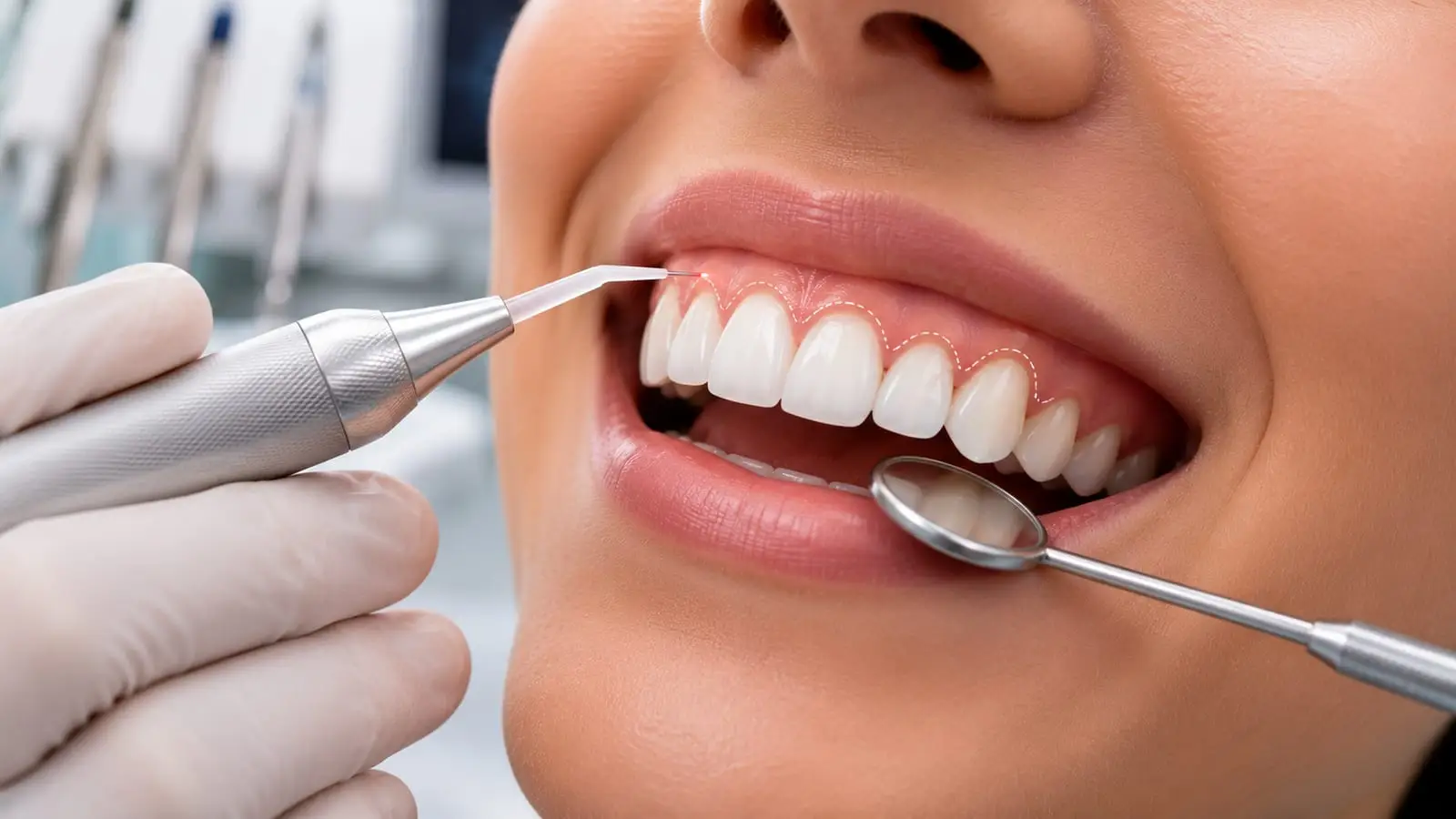
Gum contouring in Turkey, also called a gum lift or gum reshaping, is a cosmetic dental procedure that reshapes the gum line for a more balanced smile. Whether you have excess gum tissue causing a "gummy" smile or an uneven gum line that makes some teeth look shorter than others, reshaping the visible gum can transform how your smile looks, from €300 through Luna Clinic Medical Travel Services in Istanbul.
Gum overgrowth affects about 14% of adults, and up to half of people experience some degree of gum recession, so gum contouring is one of the most requested cosmetic dentistry treatments for enhancing both appearance and oral health. Luna Clinic Medical Travel Services is a medical travel coordination company: we work with independent partner dentists who practise at their own accredited clinics in Istanbul, using modern dental lasers and digital smile design.
From your first enquiry, a bilingual coordinator manages your travel, accommodation, transfers and interpretation, while every clinical decision, from suitability to how much tissue to reshape, is made independently by your chosen partner dentist. Luna does not perform dental treatment and does not guarantee outcomes.
Cost comparison: Turkey vs the UK
| Location | Typical price | What is included |
|---|---|---|
| Turkey (Istanbul, Luna partner surgeons) | from €300 | Procedure, hotel, transfers, interpreter |
| United Kingdom | £800-£1,500 | Procedure only |
Indicative prices, last checked in July 2026. Turkey figures are starting prices quoted in euro by independent partner surgeons and cover the items listed. UK figures are typical private prices in pounds sterling and are shown for comparison only. Your surgeon sets the final price after assessment.
Compare 50 procedures in the Turkey Treatment Cost Report 2026
How much does gum contouring cost in Turkey?
Gum contouring cost in Turkey typically ranges from €300 to €700 per session, considerably lower than the UK, where a laser gum contouring session usually costs £800 to £1,500. The gum contouring cost UK patients pay privately can be several times higher for the same procedure. The price difference is structural: lower clinic running costs, labour and rent, plus health-tourism incentives and a favourable exchange rate, not a compromise on equipment or expertise.
The final cost depends on the technique used, the number of teeth being treated, and whether crown lengthening (which also reshapes bone) is needed. Luna presents the dentist’s treatment fee and the travel coordination fee side by side, so you can make a genuine comparison with home-country pricing.
- Technique. Laser gum removal is typically slightly more than scalpel contouring, but often means less bleeding and faster healing.
- Number of teeth. Reshaping the gum around a few front teeth costs less than treating a wider smile zone.
- Crown lengthening. Cases that involve reshaping bone as well as gum take longer and sit at the upper end of the range.
- Combined treatment. Adding veneers or crowns for the final result is quoted separately and transparently.
Gum contouring Turkey all-inclusive package: what is included
International patients travelling to Istanbul for a gum lift typically book an all-inclusive package covering everything from arrival to your follow-up. A typical Luna-coordinated trip includes:
- Full diagnostic consultation with X-rays and a digital smile design preview
- The gum contouring procedure under local anaesthesia with your partner dentist
- VIP airport, hotel and clinic transfers throughout your stay
- 4-5 star hotel accommodation for the recommended stay
- Post-treatment medications and aftercare essentials
- Dedicated bilingual patient coordinator throughout your stay
- A follow-up review before your return flight
- Structured remote check-ins coordinated with your partner dentist after you return home
Package pricing starts from €300 with full cost transparency and a written quote before you travel. Clinical follow-up is conducted by your dentist, not by Luna. Your dentist provides the final quote after consultation.
Types of gum contouring
Your partner dentist recommends the approach that fits your gum line and goals. The main techniques are:
- Laser gum contouring
- A focused dental laser vaporises excess gum tissue with minimal bleeding, less swelling and faster healing. It is the modern, preferred method for most gummy-smile cases.
- Scalpel gum contouring
- Traditional surgical tools remove excess tissue, suited to more extensive cases or where a larger amount of gum needs reshaping.
- Crown lengthening
- A deeper procedure that reshapes both gum and underlying bone to expose more tooth surface, used for severe gummy smiles or before crowns and veneers.
Gum contouring recovery time
Recovery varies with the technique and how much tissue is reshaped; your dentist sets your individual timeline. The general trajectory is:
- Days 1-3Mild swelling, soreness and sensitivity are normal and peak around day two to three. Cold compresses and over-the-counter painkillers like ibuprofen help.
- 1 weekMost discomfort settles. Stick to soft, lukewarm foods and brush gently around the treated area with a soft-bristled brush.
- 2 weeksInitial healing is largely complete and the new gum line is clearly visible. Many patients return to normal routines.
- 1 monthFull recovery. The gums have healed and the reshaped smile has settled into its final appearance.
Gum contouring results and success rate
Gum contouring is known for a high success rate, with over 90% of procedures achieving the desired aesthetic outcome and patient satisfaction reported around 95%. Reviewing gum contouring before and after images from your dentist’s own practice is one of the best ways to understand what is realistic for your smile.
Results are essentially permanent: once excess gum tissue is removed it does not grow back, though gentle changes can occur over decades with natural ageing. Good oral hygiene, regular check-ups and avoiding smoking help preserve the outcome. Stories of gum contouring gone wrong almost always trace back to over-removal of tissue, which is why planning with digital imaging before any tissue is touched matters so much.
Am I a good candidate for gum contouring?
Only the independent partner dentist you consult with can confirm suitability. In general, good candidates have a gummy smile, an uneven gum line, gum tissue covering too much of the tooth, or teeth that look small or worn, and are in good general dental health with no active gum disease.
Gum contouring removes excess tissue but does not add tissue back where gums have receded; that needs a different treatment called gum grafting. The procedure is not suitable during pregnancy or for patients on certain blood-thinning medication. Any gum disease must be treated first, and your consultation will confirm which approach suits you.
Why patients choose Luna Clinic Medical Travel
Verifiable partner surgeons
We only introduce patients to surgeons whose board certification and society memberships can be independently verified.
Clinical decisions stay with your surgeon
Suitability, technique, the procedure and clinical aftercare are handled by your partner surgeon at their own accredited facility.
One coordinator, start to home
A bilingual Luna coordinator handles flight guidance, accommodation, transfers, interpretation and communication with your surgeon.
Transparent, separate quotes
Your surgeon quotes the medical fee; Luna quotes travel coordination separately. You see both side by side, with no hidden costs.
What to expect on your journey
From your first assessment in Istanbul to recovery back home. Clinical steps are carried out by your independent partner surgeon; Luna coordinates the travel around them.
-
Consultation & assessment
Your independent partner surgeon reviews your goals, health and anatomy and confirms whether the treatment is right for you.
-
Personalised treatment plan
Technique, timing and what to expect are planned around your case, with a clear, itemised quote before you travel.
-
Your procedure in Istanbul
Luna coordinates transfers, accommodation and interpretation; your surgeon carries out the treatment at their accredited facility.
-
Recovery & follow-up at home
You return home with a clear recovery plan; Luna keeps you connected to your surgeon for follow-up communication.
Reviewing before-and-after results is an important step when choosing a surgeon. Where available, before-and-after images are sourced from the partner surgeon’s own practice, shown as examples only, and do not guarantee a similar result for your case.
Get a personalised quote
Tell us your goals and we will introduce you to the right independent partner surgeon in Istanbul, then coordinate every step.
- No obligation, free of charge
- Reply from a bilingual patient coordinator
- Clear, itemised quote before you travel
Thank you, your enquiry is on its way.
A bilingual Luna patient coordinator will get back to you shortly. We coordinate your travel; your independent partner surgeon makes every clinical decision.
Frequently Asked Questions
How much does gum contouring cost in Turkey?
Gum contouring through Luna’s partner clinics costs €300 to €700, depending on the technique used (laser is typically slightly more than scalpel), the number of teeth being treated, and whether crown lengthening is needed. By comparison, the same procedure in the UK private sector typically costs £800 to £1,500. Your full quote is fixed in writing before you travel, with no hidden fees on treatment day.
Is gum contouring in Turkey safe?
Gum contouring in Turkey is safe when performed at an accredited clinic by a qualified dentist using modern laser equipment or sterile surgical instruments. Cases of gum contouring gone wrong almost always trace back to clinics that remove too much tissue. Through Luna’s independent partner clinics, your case is planned with diagnostic imaging and a digital smile design preview before any tissue is touched, and your dentist discusses the specific risks for your case.
What is the difference between laser gum contouring, scalpel surgery and crown lengthening?
Laser contouring uses a focused laser to vaporise excess gum tissue with minimal bleeding and faster healing, the modern preferred method. Scalpel contouring uses traditional tools, suited to more extensive cases. Crown lengthening is a deeper procedure that adjusts both gum and underlying bone, used for severe gummy smiles or to expose more tooth surface for crowns and veneers.
Should I have gum contouring or Botox for my gummy smile?
It depends on the cause. Botox suits lip-driven gummy smiles where an over-active upper lip muscle pulls too high, but results last only three to four months and need repeating. Gum contouring is right for tissue-driven gummy smiles where there is genuinely too much gum covering the teeth, and the result is essentially permanent. A consultation with diagnostic imaging confirms which type you have.
Is gum contouring painful and what anaesthesia is used?
The procedure is performed under local anaesthesia, so you feel pressure but no pain during treatment. Mild soreness, swelling and sensitivity are normal for three to seven days afterwards and respond well to over-the-counter painkillers such as ibuprofen. Laser contouring causes less post-operative discomfort than scalpel surgery because it cauterises blood vessels as it works.
How long does gum contouring recovery take?
Initial healing takes one to two weeks and full healing about a month. For the first few days, eat soft lukewarm foods, avoid spicy, crunchy or acidic foods, brush gently around the treated area, and rinse with a saltwater solution after meals. Swelling typically peaks at two to three days and subsides within a week. Avoid smoking entirely during healing.
Are the results permanent, or will my gums grow back?
Gum contouring results are essentially permanent. Once excess gum tissue is removed it does not grow back. Mild changes can occur over decades due to natural ageing or recession, but the gummy-smile improvement is long-lasting. Good oral hygiene, regular check-ups and avoiding smoking help preserve your results.
How long do I need to stay in Istanbul, and what does Luna arrange?
Gum contouring is usually a single short visit, and many patients combine it with a couple of days to rest and attend a follow-up. Luna coordinates the travel side: flight guidance, 4-5 star accommodation, airport and in-city transfers, interpretation, and ongoing communication with your independent partner dentist. The consultation, imaging, procedure and clinical aftercare are arranged and quoted directly by your dentist. We present both quotes together.