Thigh Lift in Turkey (Thighplasty): Cost & Partner Surgeons in Istanbul
A thigh lift in Turkey, medically known as thighplasty, with independent, board-certified partner surgeons in Istanbul, from €2,500 all-inclusive. Clinical decisions are made by your surgeon; Luna coordinates the journey from your first enquiry to your return home.
 Written by Kubilay Aydeğer

A specialist with 14+ years in medicine and specialist training at Başkent University and Dr. Lütfi Kırdar Kartal Training and Research Hospital in Şişli, Istanbul. An independent partner surgeon; he reviews this page for medical accuracy and does not guarantee individual outcomes.
Last reviewed
An independent partner specialist who may treat patients Luna introduces.
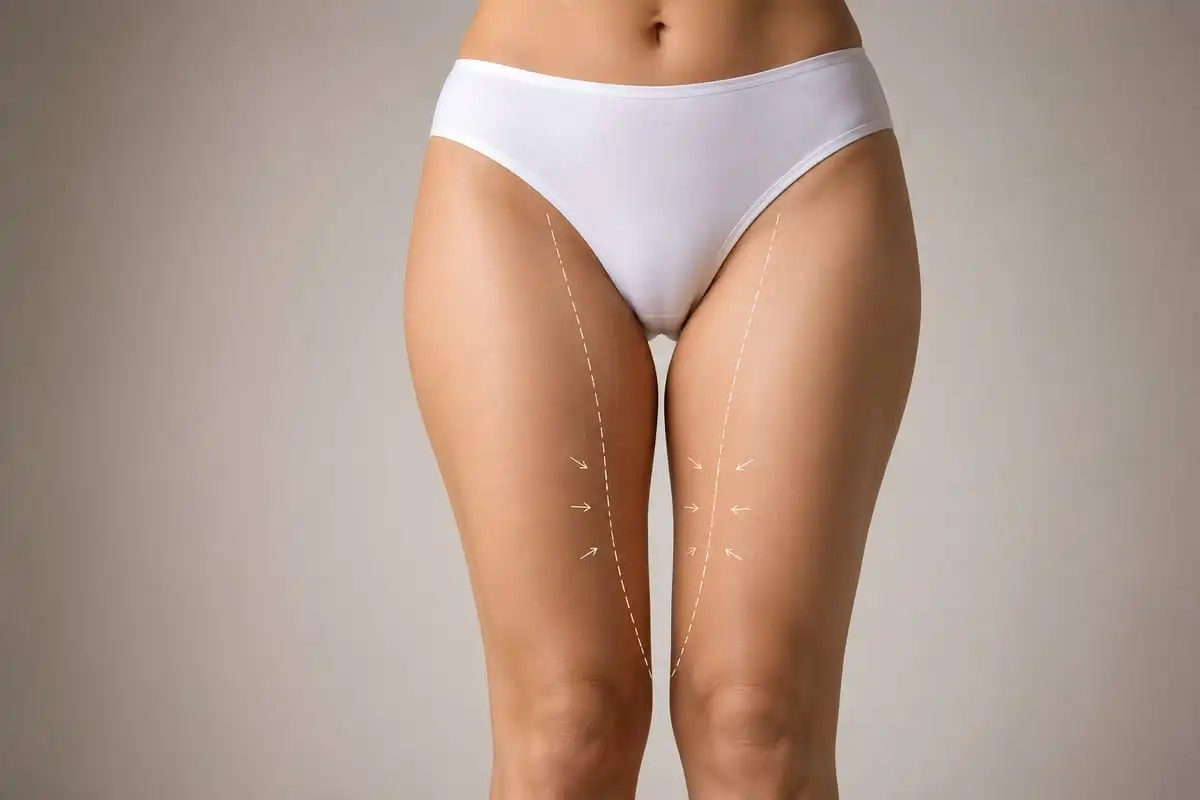
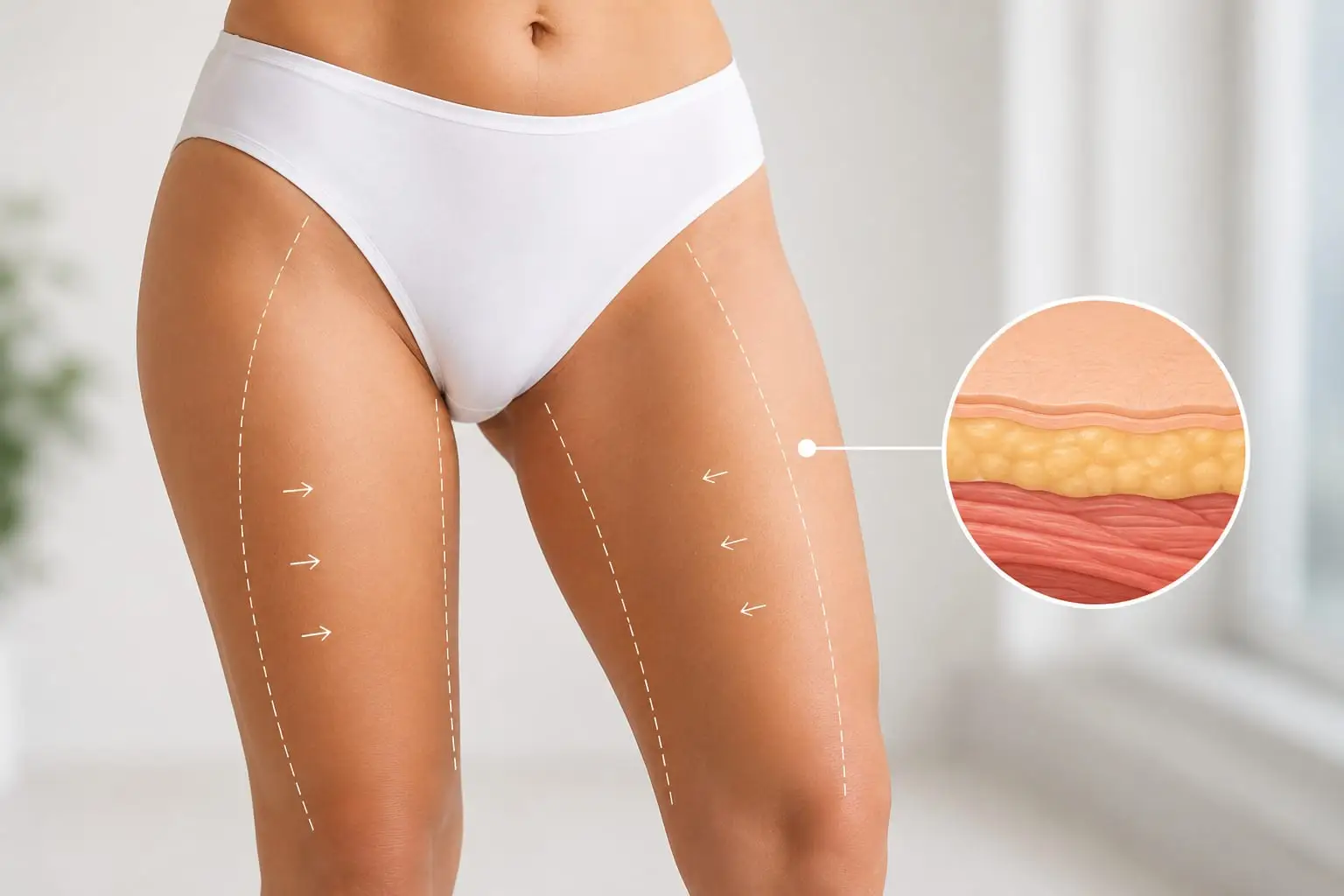
A thigh lift in Turkey, medically known as thighplasty, is a body contouring surgery that removes excess skin and fat from the thigh area and tightens the underlying tissue, reshaping and smoothing the legs. It is one of the most requested procedures after significant weight loss, when diet and exercise alone cannot restore the natural contour of the inner and outer thighs. Over 8,000 thigh lift procedures were performed in the United States in 2020 alone, reflecting how popular the surgery has become among people seeking a more toned, sculpted look.
Turkey is one of the world’s most established destinations for cosmetic and body contouring surgery, supported by a high concentration of trained plastic surgeons and internationally accredited facilities. Luna Clinic Medical Travel Services is a medical travel coordination company in Istanbul: we work with independent partner surgeons who hold board certification and operate at Joint Commission International (JCI) accredited hospitals or their own private practices. Luna does not perform surgery and does not guarantee outcomes.
From your first enquiry, a bilingual coordinator manages your travel, accommodation, transfers and interpretation, while every clinical decision, from suitability to the choice of thigh lift technique, is made independently by your chosen partner surgeon. A thigh lift cost in the UK typically runs to £6,000 to £10,000; in Istanbul the same surgery, coordinated through Luna, starts from €2,500.
Cost comparison: Turkey vs the UK
| Location | Typical price | What is included |
|---|---|---|
| Turkey (Istanbul, Luna partner surgeons) | from €2,500 | Procedure, hotel, transfers, interpreter |
| United Kingdom | £6,000-£10,000 | Procedure only |
Indicative prices, last checked in July 2026. Turkey figures are starting prices quoted in euro by independent partner surgeons and cover the items listed. UK figures are typical private prices in pounds sterling and are shown for comparison only. Your surgeon sets the final price after assessment.
Compare 50 procedures in the Turkey Treatment Cost Report 2026
How much does a thigh lift cost in Turkey?
The cost of a thigh lift in Turkey typically ranges from €2,500 to €3,000, considerably lower than in the UK, where thigh lift surgery cost usually falls between £6,000 and £10,000, a saving of around 50 to 65 percent. Most international patients travel on an all-inclusive package that bundles the surgical fee charged by the partner surgeon with airport transfers, hotel accommodation, compression garments, medications and follow-up into a single transparent quote.
The final price depends on the type of thigh lift, the extent of excess skin, and whether the surgery is combined with liposuction or another body contouring procedure. Luna presents the surgeon’s medical fee and the travel coordination fee side by side, so you can make a genuinely informed comparison with home-country pricing.
- Type of thigh lift. An inner (medial) thigh lift is generally less involved than a vertical thigh lift that addresses excess skin along the full length of the leg.
- Extent of excess skin. Post-weight-loss cases with substantial skin laxity require more extensive surgery than a mild refinement.
- Combined procedures. Adding liposuction, an arm lift or a lower body lift in the same session changes the total fee and theatre time.
- Surgeon's experience. Highly experienced, reputable partner surgeons typically charge more, and the JCI-accredited facility and length of stay also influence the total.
Thigh lift Turkey all-inclusive package: what is included
International patients travelling to Istanbul for a thigh lift typically book an all-inclusive package covering everything from arrival to discharge. A typical Luna-coordinated trip includes:
- Full surgical fee, anaesthesia and one night in a JCI-accredited hospital with the partner surgeon
- Pre-operative blood tests and health screening
- Compression garments and all post-operative medications
- VIP airport, hotel and clinic transfers for every appointment
- 4-star hotel accommodation for the full recommended recovery stay
- Dedicated bilingual patient coordinator throughout your journey
- Follow-up wound assessment and fit-to-fly clearance before your return flight
- Structured remote check-ins coordinated with your partner surgeon at 1 week, 1 month and 3 months after you return home
Package pricing starts from €2,500 with full cost transparency. Flights and travel insurance are not included. Clinical follow-up is conducted by your surgeon, not by Luna. Your surgeon provides the final quote after consultation.
Types of thigh lift surgery
Your partner surgeon recommends the approach that fits the location and degree of skin laxity. The common types are:
- Inner (medial) thigh lift
- Removes excess skin and fat from the inner thigh through an incision hidden in the groin crease; the most common type, suited to mild to moderate laxity.
- Outer (lateral) thigh lift
- Targets the outer thigh and hip through an incision along the hipbone, often combined with a buttock or lower body lift for balanced contouring.
- Vertical thigh lift
- Uses a vertical incision running down the inner thigh to remove larger amounts of excess skin along the full leg; more extensive reshaping with a longer scar.
- Mini thigh lift
- A less extensive option for mild excess skin confined to the upper inner thigh near the groin, with a smaller incision and faster recovery.
Thigh lift recovery time
Recovery from thigh lift surgery varies by technique and how your body heals; your surgeon sets your individual timeline. Compression garments are worn for 6 to 8 weeks. The general trajectory is:
- 1 weekSwelling, bruising and discomfort are expected. Compression garments support the thighs, physical activity is limited, and gentle walking encourages circulation.
- 3 weeksSwelling and bruising noticeably decrease and light activities may be resumed. Strenuous exercise is still avoided.
- 4 weeksMost patients return to normal daily activities; incisions have healed significantly, though slight tightness or numbness is normal.
- 3 monthsThe thighs have a more defined, smoother appearance and most swelling has resolved. Regular exercise can resume with your surgeon’s clearance.
- 6-12 monthsFinal results are established as residual swelling disappears and scars fade to flatter, paler lines.
Thigh lift surgery results and success rate
Thigh lift surgery is reported to have a high success rate, with published figures generally around 90 percent and patient satisfaction commonly cited at 85 to 90 percent when performed by an experienced surgeon on a suitable candidate. Most patients report a smoother, more toned look and greater confidence in fitted clothing and swimwear.
The removal of excess skin is permanent, so the structural improvement lasts, though significant weight gain or the natural aging process can affect the remaining skin over time. Individual outcomes always depend on skin quality, the extent of surgery and the surgeon’s clinical judgment. The most reliable indicator for your case is an honest pre-treatment conversation with your partner surgeon, who can show before-and-after examples comparable to yours.
Am I a good candidate for a thigh lift?
Only the independent partner surgeon you consult with can confirm suitability. In general, good candidates are at a stable, healthy weight, have significant excess or sagging skin on the inner or outer thighs that does not respond to diet and exercise, are in good general health with no conditions that impair healing, and are non-smokers or willing to pause smoking around surgery.
Patients who have lost a large amount of weight, including after bariatric surgery, are among the most common candidates. If you are still planning significant weight loss, surgeons generally advise waiting until your weight has been stable for three to six months, as further loss can affect the result. A thigh lift can also resolve painful chafing and skin irritation caused by excess inner thigh skin.
Why patients choose Luna Clinic Medical Travel
Verifiable partner surgeons
We only introduce patients to surgeons whose board certification and society memberships can be independently verified.
Clinical decisions stay with your surgeon
Suitability, technique, the procedure and clinical aftercare are handled by your partner surgeon at their own accredited facility.
One coordinator, start to home
A bilingual Luna coordinator handles flight guidance, accommodation, transfers, interpretation and communication with your surgeon.
Transparent, separate quotes
Your surgeon quotes the medical fee; Luna quotes travel coordination separately. You see both side by side, with no hidden costs.
What to expect on your journey
From your first assessment in Istanbul to recovery back home. Clinical steps are carried out by your independent partner surgeon; Luna coordinates the travel around them.
-
Consultation & assessment
Your independent partner surgeon reviews your goals, health and anatomy and confirms whether the treatment is right for you.
-
Personalised treatment plan
Technique, timing and what to expect are planned around your case, with a clear, itemised quote before you travel.
-
Your procedure in Istanbul
Luna coordinates transfers, accommodation and interpretation; your surgeon carries out the treatment at their accredited facility.
-
Recovery & follow-up at home
You return home with a clear recovery plan; Luna keeps you connected to your surgeon for follow-up communication.
Reviewing before-and-after results is an important step when choosing a surgeon. Where available, before-and-after images are sourced from the partner surgeon’s own practice, shown as examples only, and do not guarantee a similar result for your case.
Get a personalised quote
Tell us your goals and we will introduce you to the right independent partner surgeon in Istanbul, then coordinate every step.
- No obligation, free of charge
- Reply from a bilingual patient coordinator
- Clear, itemised quote before you travel
Thank you, your enquiry is on its way.
A bilingual Luna patient coordinator will get back to you shortly. We coordinate your travel; your independent partner surgeon makes every clinical decision.
Frequently Asked Questions
How much does a thigh lift cost in Turkey?
Through Luna Clinic Medical Travel Services, thigh lift surgery in Istanbul starts from €2,500 and typically ranges up to €3,000, coordinated with independent partner surgeons, compared with £6,000 to £10,000 in the UK, a saving of around 50 to 65 percent. Most patients book an all-inclusive package covering the surgical fee, one night in hospital, anaesthesia, compression garments, medications, VIP transfers and 4-star accommodation. The final cost depends on the type of thigh lift and whether it is combined with liposuction.
What is the difference between an inner, outer and vertical thigh lift?
An inner (medial) thigh lift removes excess skin from the inner thigh through an incision hidden in the groin crease and suits mild to moderate laxity. An outer (lateral) thigh lift targets the outer thigh and hip through an incision along the hipbone and is often combined with a lower body lift. A vertical thigh lift addresses significant excess skin along the full length of the inner thigh using a vertical incision, giving more extensive reshaping but a longer scar. Your surgeon recommends the right technique at consultation.
Is a thigh lift or liposuction right for me?
Liposuction removes excess fat but does not tighten loose skin; in fact, removing fat from an area with poor skin elasticity can worsen laxity. A thigh lift removes excess skin and tightens underlying tissue. If your main concern is stubborn fat and your skin tone is good, liposuction alone may be enough. If you have loose, sagging skin, particularly after weight loss, a thigh lift is the appropriate procedure. Many patients benefit from both combined. Your surgeon assesses your skin quality and fat distribution to advise.
How long is recovery and when can I return to work?
Most patients resume desk work and light daily activities within 1 to 2 weeks. Compression garments are worn for 6 to 8 weeks, and strenuous exercise and heavy lifting are avoided for the same period. The first few days involve the most discomfort, swelling and bruising, managed with prescribed medication. By month three most swelling has resolved and the contour is notably improved. Final results, including scar maturation, are established at 6 to 12 months.
How long do I need to stay in Turkey after a thigh lift?
Partner surgeons typically recommend staying in Istanbul for 7 to 10 days. This covers your one-night hospital stay, initial hotel recovery, follow-up wound assessment, any dressing changes, and fit-to-fly clearance from your surgeon before you travel. Flying too soon after lower limb surgery carries an elevated DVT risk, so compression stockings and regular movement during travel are advised. Luna manages the full itinerary and return VIP airport transfer, with remote aftercare check-ins beginning once you arrive home.
Will a thigh lift leave visible scars?
Scarring is inherent to any thigh lift, but surgeons place incisions strategically. For an inner thigh lift the scar sits within the groin crease, typically hidden by underwear and swimwear. For a vertical thigh lift a scar runs down the inner thigh and is more visible, though it sits where it is less noticeable when standing. All scars are initially pink and raised, fading to flatter, paler lines over 12 to 18 months. Silicone sheeting, sun protection and massage following your surgeon’s protocol improve the long-term appearance.
Are thigh lift results permanent?
The removal of excess skin is permanent, so the structural improvement lasts and the excised skin does not grow back. However, significant weight gain after surgery can stretch the remaining skin, and natural aging continues to affect skin elasticity over time. Patients who maintain a stable weight and a healthy lifestyle consistently preserve their results long-term. For this reason surgeons recommend being at or close to your goal weight and keeping it stable for at least three to six months before surgery.
What does Luna help arrange for a thigh lift trip?
Luna coordinates the travel side: flight guidance, 4-star accommodation, VIP airport and in-city transfers, interpretation, and ongoing communication with your independent partner surgeon before, during and after your visit. The surgical fee, tests, hospital stay and clinical aftercare are arranged and quoted directly by your surgeon. We present both quotes together so you see the full cost with no hidden extras.