FUE Hair Transplant in Turkey: Cost, Results & Partner Surgeons in Istanbul
A FUE hair transplant in Turkey with independent, board-certified partner surgeons in Istanbul, from €1,900 all-inclusive. Clinical decisions are made by your surgeon; Luna coordinates the journey from your first enquiry to your return home.
 Written by Kubilay Aydeğer

An Associate Professor of Plastic, Reconstructive and Aesthetic Surgery with 24+ years in medicine, trained at Gülhane Military Medical Academy (GATA) and now in private practice in Nişantaşı, Istanbul, with clinical focus on hair restoration and transplantation. He is an independent partner surgeon who reviews this page for medical accuracy and does not guarantee individual outcomes.
Last reviewed
An independent partner specialist who may treat patients Luna introduces.
Hereditary pattern hair loss, a receding hairline or thinning at the crown can affect confidence at any age. A FUE hair transplant in Turkey, medically known as Follicular Unit Extraction, moves healthy follicles from the back and sides of the scalp into thinning areas to restore natural-looking, permanent hair, at a fraction of what you would pay in the UK or Western Europe.
Turkey is the world’s busiest destination for hair restoration, home to hundreds of dedicated clinics and a deep pool of experienced plastic surgeons. Luna Clinic Medical Travel Services is a medical travel coordination company in Istanbul: we introduce patients to independent partner surgeons who hold board certification and operate at accredited facilities. The FUE technique can transplant roughly 600 to 5,000 grafts in a single session and is prized for leaving no linear scar and delivering a reported success rate around 98%.
From your first enquiry, a bilingual coordinator manages your travel, accommodation, transfers and interpretation, while every clinical decision, from graft count to hairline design, is made independently by your chosen partner surgeon at their own clinical setting. Luna does not perform surgery and does not guarantee outcomes.
Cost comparison: Turkey vs the UK
| Location | Typical price | What is included |
|---|---|---|
| Turkey (Istanbul, Luna partner surgeons) | from €1,900 | Procedure, hotel, transfers, interpreter |
| United Kingdom | £7,000-£13,000 | Procedure only |
Indicative prices, last checked in July 2026. Turkey figures are starting prices quoted in euro by independent partner surgeons and cover the items listed. UK figures are typical private prices in pounds sterling and are shown for comparison only. Your surgeon sets the final price after assessment.
Compare 50 procedures in the Turkey Treatment Cost Report 2026
How much does a FUE hair transplant in Turkey cost?
The FUE hair transplant cost in Turkey starts from €1,900, compared with roughly £7,000 to £13,000 in the UK, or €8,000 to €15,000 in Western Europe. Most international patients travel on an all-inclusive package that bundles the surgical fee charged by the partner surgeon with VIP airport transfers, hotel accommodation, medications and aftercare into a single transparent quote. Turkey remains one of the most affordable places for high-quality hair restoration.
Beyond the base price, it is worth comparing what each package covers. Luna presents the surgeon’s medical fee and the travel coordination fee side by side, so you can make a genuinely informed comparison with home-country pricing. Be cautious of unusually cheap offers under €1,500, which can signal technician-only work or rushed mega-sessions. The final Istanbul hair transplant cost depends on the factors below.
- Number of grafts. A receding hairline may need 1,500 to 2,500 grafts, while advanced loss can require 4,500 or more, which affects the total fee.
- Technique. Sapphire FUE and Robotic FUE use specialist blades and equipment, which can influence the price versus standard FUE.
- Surgeon's experience. Highly experienced, reputable partner surgeons typically charge more for their work.
- Facility and stay. Accredited hospitals and the length of your recommended stay (typically 3 nights) influence the total package.
FUE hair transplant Turkey all-inclusive package
International patients travelling to Istanbul for a FUE hair transplant typically book an all-inclusive package covering everything from arrival to discharge. A typical Luna-coordinated trip includes:
- Full surgical fee, local anaesthesia and clinic time with the partner surgeon
- Online scalp assessment and pre-operative blood tests
- VIP airport, hotel and clinic transfers throughout your stay
- Hotel accommodation for the recommended stay (typically 3 nights)
- Post-operative medications, aftercare kit and washing protocol guidance
- Dedicated bilingual patient coordinator throughout your stay
- Post-operative check-up and first hair wash before your return flight
- Structured remote check-ins coordinated with your partner surgeon as growth appears
Package pricing starts from €1,900 with full cost transparency. Clinical follow-up is conducted by your surgeon, not by Luna. Your surgeon provides the final quote after consultation.
Types of FUE hair transplant
All FUE methods follow the same principle of extracting and transplanting individual follicles; your partner surgeon recommends the approach that fits your donor area and goals.
- Manual FUE
- The surgeon uses a handheld micro-punch to extract each follicle, allowing meticulous control and precise graft placement.
- Robotic FUE
- A robotic system assists in identifying and harvesting grafts, increasing speed and consistency for high graft counts.
- Sapphire FUE
- Ultra-sharp sapphire blades create smaller, more precise channels, which can promote faster healing and reduce scarring.
- Unshaven FUE
- Suited to smaller sessions where only the donor zone is trimmed, helping keep the procedure discreet.
FUE hair transplant recovery time
Recovery is relatively short, though full results take up to a year. Your surgeon sets your individual timeline; the general trajectory is:
- 1 weekThe scalp shows redness and small scabs where grafts were placed. Most patients feel minimal discomfort, return to light activity, and scabs begin to fall away.
- 3 weeksTransplanted hairs may enter a normal, temporary shedding phase known as shock loss. Redness fades and the scalp heals.
- 3 monthsThe first fine new hairs begin to appear as the follicles emerge from their resting phase.
- 6 monthsAround 50 to 60 percent of the final growth is visible, with noticeably thicker, fuller coverage.
- 12 monthsFull results are typically visible as density and texture continue to refine.
FUE hair transplant results and success rate
FUE is one of the most effective hair restoration procedures available, with a reported success rate around 98% and patient satisfaction above 90% at reputable clinics. Because grafts are taken from the DHT-resistant safe donor zone, the transplanted hair is permanent and continues to grow for life. Reviewing genuine before-and-after photos is one of the most important steps when choosing a surgeon.
Individual outcomes always depend on donor density, the extent of hair loss on the Norwood scale, and the surgeon’s clinical judgment. Your native, non-transplanted hair may continue to thin, which is why some surgeons recommend Finasteride, Minoxidil or PRP as long-term maintenance. The most reliable indicator for your case is an honest consultation with your partner surgeon.
Am I a good candidate for a FUE hair transplant?
Only the independent partner surgeon you consult with can confirm suitability. In general, good candidates are healthy adults with stable, pattern-based hair loss, sufficient donor density at the back and sides of the head, no active scalp conditions, and realistic expectations. Patients under 25 may be advised to wait until their loss pattern stabilises.
Preparing for surgery is straightforward: tell your surgeon about any medication or chronic conditions at your first consultation, ask whether to pause over-the-counter aspirin, and avoid smoking and alcohol for 24 hours before and after the procedure. If a blood thinner or any other medicine was prescribed to you, only the clinician who prescribed it can tell you to stop.
Why patients choose Luna Clinic Medical Travel
Verifiable partner surgeons
We only introduce patients to surgeons whose board certification and society memberships can be independently verified.
Clinical decisions stay with your surgeon
Suitability, technique, the procedure and clinical aftercare are handled by your partner surgeon at their own accredited facility.
One coordinator, start to home
A bilingual Luna coordinator handles flight guidance, accommodation, transfers, interpretation and communication with your surgeon.
Transparent, separate quotes
Your surgeon quotes the medical fee; Luna quotes travel coordination separately. You see both side by side, with no hidden costs.
What to expect on your journey
From your first assessment in Istanbul to recovery back home. Clinical steps are carried out by your independent partner surgeon; Luna coordinates the travel around them.
-
Consultation & assessment
Your independent partner surgeon reviews your goals, health and anatomy and confirms whether the treatment is right for you.
-
Personalised treatment plan
Technique, timing and what to expect are planned around your case, with a clear, itemised quote before you travel.
-
Your procedure in Istanbul
Luna coordinates transfers, accommodation and interpretation; your surgeon carries out the treatment at their accredited facility.
-
Recovery & follow-up at home
You return home with a clear recovery plan; Luna keeps you connected to your surgeon for follow-up communication.
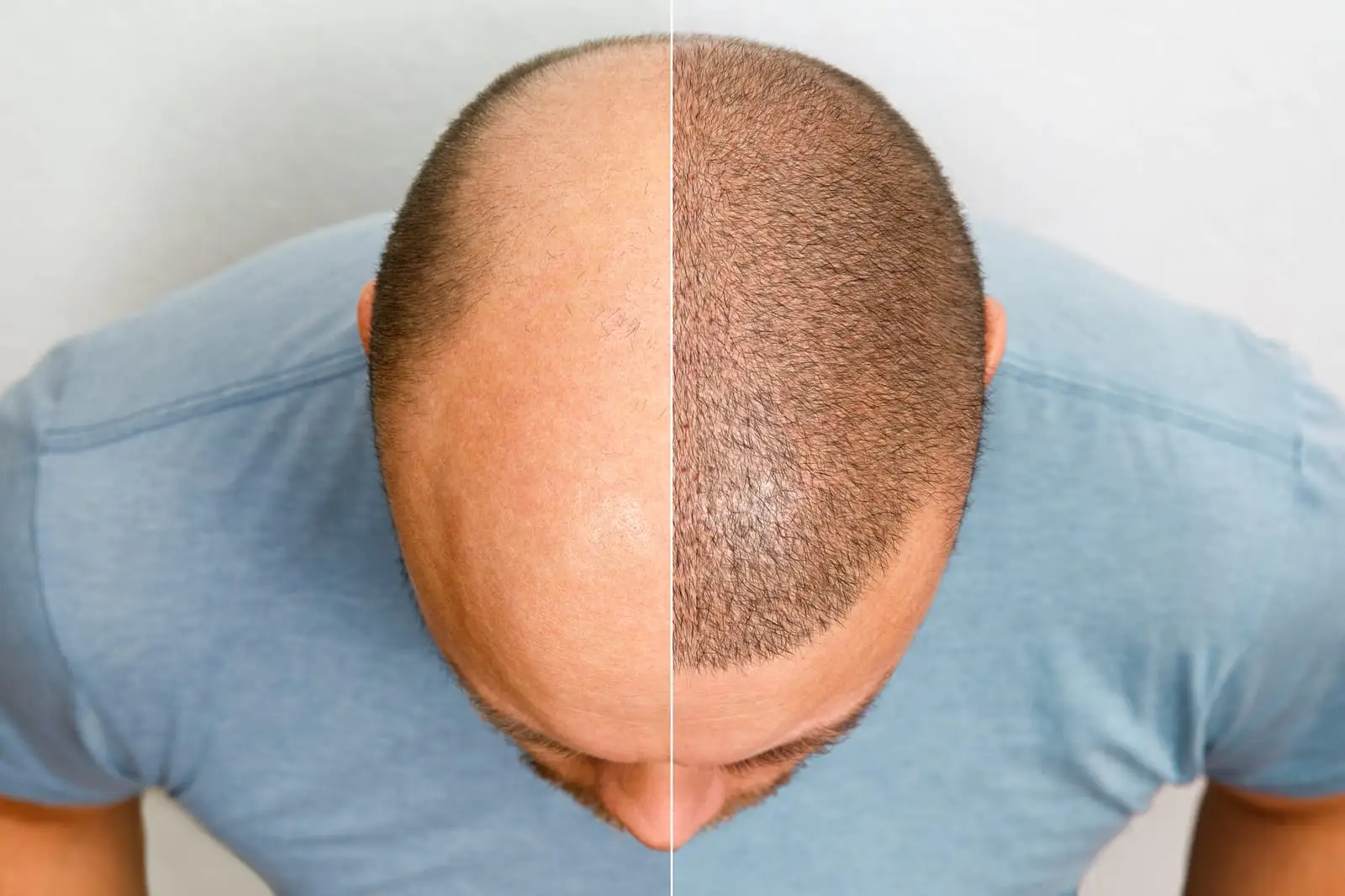
Reviewing before-and-after results is an important step when choosing a surgeon. Where available, before-and-after images are sourced from the partner surgeon’s own practice, shown as examples only, and do not guarantee a similar result for your case.
Get a personalised quote
Tell us your goals and we will introduce you to the right independent partner surgeon in Istanbul, then coordinate every step.
- No obligation, free of charge
- Reply from a bilingual patient coordinator
- Clear, itemised quote before you travel
Thank you, your enquiry is on its way.
A bilingual Luna patient coordinator will get back to you shortly. We coordinate your travel; your independent partner surgeon makes every clinical decision.
Frequently Asked Questions
How much does a FUE hair transplant cost in Turkey?
Through Luna Clinic Medical Travel Services, a FUE hair transplant in Istanbul starts from €1,900, coordinated with independent partner surgeons, compared with £7,000 to £13,000 in the UK, or €8,000 to €15,000 in Western Europe. Most patients book an all-inclusive package covering the surgical fee, medications, VIP transfers, hotel accommodation and aftercare. The final cost depends on the number of grafts and the technique used. Be cautious of offers under €1,500.
Is a FUE hair transplant in Turkey safe?
When performed at an accredited clinic by a licensed, experienced surgeon, FUE is very safe, with a reported success rate around 98% and minimal complications. The risks come from unregulated clinics where unlicensed technicians operate without a doctor. Luna only introduces patients to independent partner surgeons whose board certification can be independently verified, and your surgeon discusses the specific risks for your case at consultation.
How many grafts will I need?
It depends on the extent of your hair loss on the Norwood scale: typically 1,500 to 2,500 grafts for a receding hairline, 3,000 to 4,000 for moderate balding, and 4,500 to 6,000 for advanced loss. Your partner surgeon assesses your donor density and goals before quoting a graft count. Be wary of clinics that quote unusually high numbers, as overharvesting can permanently damage the donor area.
What is the difference between FUE and DHI?
Both extract individual follicles, but DHI uses a Choi implanter pen that opens the channel and places the graft in one step, giving higher density in the hairline and an unshaven option. Standard FUE creates channels separately with a sapphire or steel blade and is more versatile for high graft counts and large areas. Your surgeon recommends the best method for your hair loss pattern.
Is the FUE procedure painful?
FUE is performed under local anaesthesia, so the scalp is completely numb during extraction and implantation. Most patients feel only a mild pinch when the anaesthetic is injected, after which the procedure is essentially painless. Mild tightness or itching for a few days afterwards is normal and managed with the painkillers your clinic provides. Sedation is available for anxious patients.
How long do I need to stay in Istanbul for a FUE hair transplant?
Most patients stay around 3 nights: arrival and consultation on day one, the 5 to 8 hour procedure on day two, and a post-operative check-up plus first hair wash on day three before flying home. Luna arranges your accommodation and transfers around this schedule and coordinates remote follow-up once you return.
When will I see the final results?
Early new growth appears around 3 to 4 months, with about 50 to 60 percent of the result visible at 6 months. Full results typically appear at 12 months and continue to refine to around 14 to 18 months. The first weeks involve normal scabbing and shock loss, so patience and regular progress photos help you track your growth accurately.
What does Luna help arrange for a FUE hair transplant trip?
Luna coordinates the travel side: flight guidance, hotel accommodation, airport and in-city transfers, interpretation, and ongoing communication with your independent partner surgeon before, during and after your visit. The surgical fee, tests and clinical aftercare are arranged and quoted directly by your surgeon. We present both quotes together.