Beard Transplant in Turkey: Cost, Results & Partner Surgeons in Istanbul
A beard transplant in Turkey with independent, board-certified partner surgeons in Istanbul, from €2,200 all-inclusive. Clinical decisions are made by your surgeon; Luna coordinates the journey from your first enquiry to your return home.
 Written by Kubilay Aydeğer

An Associate Professor of Plastic, Reconstructive and Aesthetic Surgery with 24+ years in medicine, trained at Gülhane Military Medical Academy (GATA) and now in private practice in Nişantaşı, Istanbul, with clinical focus on hair restoration and transplantation. He is an independent partner surgeon who reviews this page for medical accuracy and does not guarantee individual outcomes.
Last reviewed
An independent partner specialist who may treat patients Luna introduces.
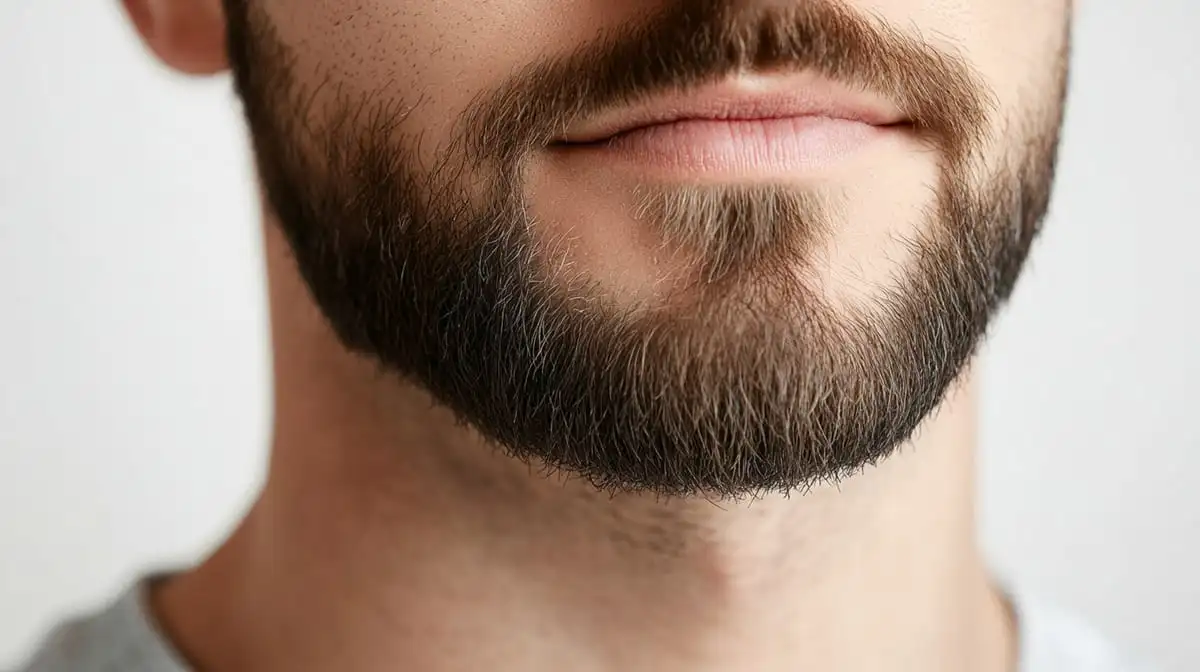
A patchy, uneven or thin beard, whether from genetics, hormonal factors or scarring from acne, burns or injury, can be difficult to fix with grooming alone. A beard transplant in Turkey moves healthy follicles from the scalp donor area into the beard to fill gaps, strengthen the jawline or build a full beard from scratch, at a fraction of what you would pay in the UK or US.
Turkey is the world’s busiest destination for hair and beard restoration, home to a deep pool of experienced surgeons. Luna Clinic Medical Travel Services is a medical travel coordination company in Istanbul: we introduce patients to independent partner surgeons who hold board certification and operate at accredited facilities. A beard transplant typically involves anywhere from a few hundred to several thousand grafts depending on the coverage you want, with a reported success rate around 95 to 98% and natural, permanent results.
From your first enquiry, a bilingual coordinator manages your travel, accommodation, transfers and interpretation, while every clinical decision, from graft count to beard design, is made independently by your chosen partner surgeon at their own clinical setting. Luna does not perform surgery and does not guarantee outcomes.
Cost comparison: Turkey vs the UK
| Location | Typical price | What is included |
|---|---|---|
| Turkey (Istanbul, Luna partner surgeons) | from €2,200 | Procedure, hotel, transfers, interpreter |
| United Kingdom | £4,300-£7,500 | Procedure only |
Indicative prices, last checked in July 2026. Turkey figures are starting prices quoted in euro by independent partner surgeons and cover the items listed. UK figures are typical private prices in pounds sterling and are shown for comparison only. Your surgeon sets the final price after assessment.
Compare 50 procedures in the Turkey Treatment Cost Report 2026
How much does a beard transplant in Turkey cost?
The beard transplant Turkey price starts from €2,200, compared with roughly £4,300 to £7,500 in the UK and US$6,500 to US$14,000 in the US, a saving of around 60 to 70 percent. Most international patients travel on an all-inclusive package that bundles the surgical fee charged by the partner surgeon with VIP transfers, hotel accommodation, medications and aftercare into a single transparent quote.
Beyond the base price, it is worth comparing what each package covers. Luna presents the surgeon’s medical fee and the travel coordination fee side by side, so you can make a genuinely informed comparison with home-country pricing. Be cautious of unusually cheap offers under €1,000, which can signal technician-only work. The final beard transplant cost in Turkey depends on the factors below.
- Number of grafts. Filling small patches may need 400 to 800 grafts, while a full, dense beard can require 2,500 to 4,000 or more, which affects the total fee.
- Technique. FUE and DHI differ in cost, with DHI typically 20 to 30 percent more for its added precision.
- Surgeon's experience. Highly experienced, reputable partner surgeons typically charge more for their work.
- Facility and stay. Accredited facilities and the length of your recommended stay (typically 3 nights) influence the total package.
Beard transplant Turkey all-inclusive package
International patients travelling to Istanbul for a beard transplant typically book an all-inclusive package covering everything from arrival to discharge. A typical Luna-coordinated trip includes:
- Full surgical fee, local anaesthesia and clinic time with the partner surgeon
- Online consultation and pre-operative blood tests
- VIP airport, hotel and clinic transfers throughout your stay
- Hotel accommodation for the recommended stay (typically 3 nights)
- Post-operative medications, aftercare kit and gentle washing guidance
- Dedicated bilingual patient coordinator throughout your stay
- Post-operative check-up and first wash before your return flight
- Structured remote check-ins coordinated with your partner surgeon as the beard fills in
Package pricing starts from €2,200 with full cost transparency. Clinical follow-up is conducted by your surgeon, not by Luna. Your surgeon provides the final quote after consultation.
Types of beard transplant
Your partner surgeon recommends the technique that fits your donor area and beard goals. Common options include:
- Follicular Unit Extraction (FUE)
- The most common method, extracting individual follicles from the scalp with minimal scarring and quick recovery, cost-effective for larger sessions.
- Direct Hair Implantation (DHI)
- Uses a Choi pen to extract and implant in one step, giving precise control over the angle and direction of each hair for a natural jawline.
- Follicular Unit Transplantation (FUT)
- Removes a strip of donor skin to harvest many grafts at once; it can leave a small linear scar and is chosen when dense coverage is needed in fewer sessions.
- Robotic-assisted
- Advanced technology assists precise extraction and placement, reducing variability for high-tech, precision-driven cases.
Beard transplant recovery time
Recovery is generally smooth but requires patience, with full results in 9 to 12 months. Your surgeon sets your individual timeline; the general trajectory is:
- 1 weekRedness, mild swelling and tiny scabs form around the transplanted follicles, which begin to fall off within 5 to 7 days. Avoid touching the area.
- 3 weeksVisible redness and swelling subside, and a normal, temporary shedding phase known as shock loss may occur.
- 3 monthsNew hair growth appears and the beard gradually begins to fill in, though full density is not yet reached.
- 6 monthsSignificant improvement in fullness and shape, with steady, natural-looking growth.
- 9-12 monthsFull, final results as the beard hair thickens and fully matures.
Beard transplant results and success rate
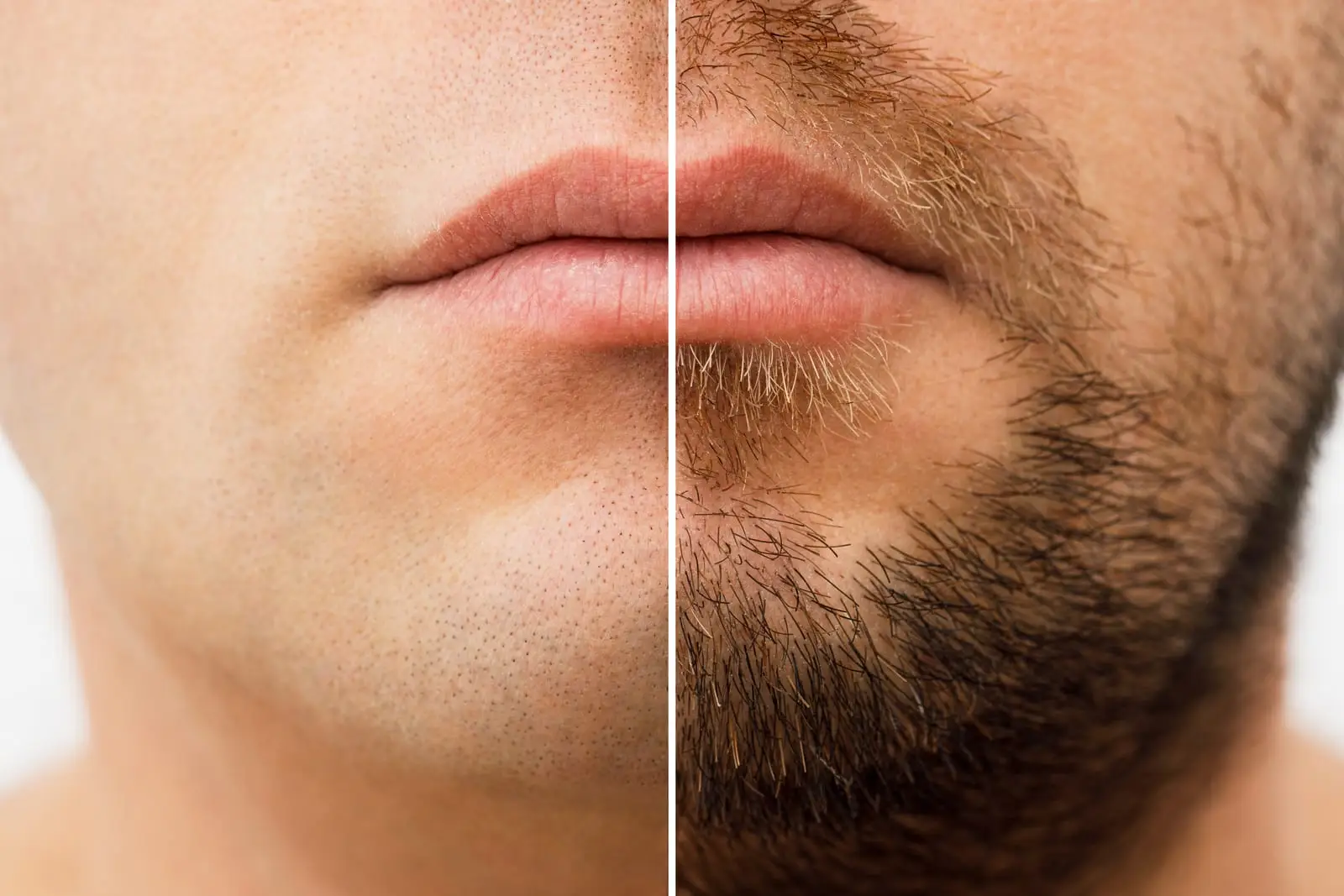
Beard transplants have a high success rate, with over 90 to 95 percent of transplanted follicles growing successfully and patient satisfaction around 95% at reputable clinics. Because grafts are taken from the DHT-resistant scalp donor zone, the transplanted beard is permanent and grows, shaves and styles just like natural facial hair. Reviewing genuine before-and-after photos is one of the most important steps when choosing a surgeon.
Individual outcomes always depend on donor density, your facial structure and the surgeon’s clinical judgment. You can usually start shaving gently with an electric razor around 10 to 14 days after surgery, once all scabs have fallen off. The most reliable indicator for your case is an honest consultation with your partner surgeon.
Am I a good candidate for a beard transplant?
Only the independent partner surgeon you consult with can confirm suitability. In general, good candidates are healthy adult men aged 25 and older with patchy, uneven or thin beard growth, or those who have lost facial hair to scarring from burns or injury, and who have sufficient donor density at the back and sides of the scalp. Most surgeons recommend waiting until age 25 so your facial hair pattern has stabilised.
Your online consultation usually asks whether this is your first beard transplant, about any chronic conditions or medication, the results you want, and whether you have a fear of needles. Preparing for surgery is straightforward: ask your surgeon whether to pause over-the-counter aspirin, and avoid smoking and alcohol for 24 hours before and after the procedure. If a blood thinner or any other medicine was prescribed to you, only the clinician who prescribed it can tell you to stop.
Why patients choose Luna Clinic Medical Travel
Verifiable partner surgeons
We only introduce patients to surgeons whose board certification and society memberships can be independently verified.
Clinical decisions stay with your surgeon
Suitability, technique, the procedure and clinical aftercare are handled by your partner surgeon at their own accredited facility.
One coordinator, start to home
A bilingual Luna coordinator handles flight guidance, accommodation, transfers, interpretation and communication with your surgeon.
Transparent, separate quotes
Your surgeon quotes the medical fee; Luna quotes travel coordination separately. You see both side by side, with no hidden costs.
What to expect on your journey
From your first assessment in Istanbul to recovery back home. Clinical steps are carried out by your independent partner surgeon; Luna coordinates the travel around them.
-
Consultation & assessment
Your independent partner surgeon reviews your goals, health and anatomy and confirms whether the treatment is right for you.
-
Personalised treatment plan
Technique, timing and what to expect are planned around your case, with a clear, itemised quote before you travel.
-
Your procedure in Istanbul
Luna coordinates transfers, accommodation and interpretation; your surgeon carries out the treatment at their accredited facility.
-
Recovery & follow-up at home
You return home with a clear recovery plan; Luna keeps you connected to your surgeon for follow-up communication.
Reviewing before-and-after results is an important step when choosing a surgeon. Where available, before-and-after images are sourced from the partner surgeon’s own practice, shown as examples only, and do not guarantee a similar result for your case.
Get a personalised quote
Tell us your goals and we will introduce you to the right independent partner surgeon in Istanbul, then coordinate every step.
- No obligation, free of charge
- Reply from a bilingual patient coordinator
- Clear, itemised quote before you travel
Thank you, your enquiry is on its way.
A bilingual Luna patient coordinator will get back to you shortly. We coordinate your travel; your independent partner surgeon makes every clinical decision.
Frequently Asked Questions
How much does a beard transplant cost in Turkey?
Through Luna Clinic Medical Travel Services, a beard transplant in Istanbul starts from €2,200, coordinated with independent partner surgeons, compared with £4,300 to £7,500 in the UK and US$6,500 to US$14,000 in the US. Most patients book an all-inclusive package covering the surgical fee, medications, VIP transfers, hotel accommodation and aftercare. The final cost depends on the number of grafts and whether FUE or DHI is used.
Is a beard transplant in Turkey safe?
When performed at an accredited clinic by a licensed, experienced surgeon, beard transplants are very safe, with a success rate around 95 to 98%. The risks come from unregulated clinics where unlicensed technicians operate without a doctor. Luna only introduces patients to independent partner surgeons whose board certification can be independently verified, and your surgeon discusses the specific risks for your case at consultation.
How many grafts do I need for a beard transplant?
It depends on the coverage you want: typically 400 to 800 grafts for small patches or scars, 1,000 to 1,500 for moustache and goatee enhancement, 1,500 to 2,500 for partial density, and 2,500 to 4,000 for a full, dense beard. Some cases use up to 7,500 grafts for very extensive coverage. Your partner surgeon recommends a precise count after assessing your donor area, facial structure and desired style.
What is the difference between FUE and DHI for beard transplants?
Both extract individual follicles from the scalp, but the implantation differs. FUE creates micro-channels in the beard before placing grafts and is cost-effective for larger sessions. DHI uses a Choi pen to extract and implant in one step, giving greater control over the angle and direction of each hair, which helps sculpt a natural jawline. DHI typically costs 20 to 30 percent more but can deliver slightly denser, more refined results.
When can I shave after a beard transplant?
You can usually start shaving with an electric razor around 10 to 14 days after the procedure, once all scabs have fallen off naturally and the area has healed. Wet shaving with a blade should be avoided for at least 3 to 4 weeks. After that, you can groom, trim, shape and style your transplanted beard exactly as you would natural facial hair.
Are the results of a beard transplant permanent?
Yes. The transplanted follicles are taken from the back or sides of the scalp, where hair is genetically resistant to DHT, and they keep those characteristics after transplantation. Once established, they grow, respond to grooming and behave like natural facial hair for life. You can shave, trim, style and grow them out as you would any beard hair.
How long do I need to stay in Istanbul for a beard transplant?
Most patients stay around 3 nights: arrival and consultation on day one, the 3 to 8 hour procedure on day two, and a post-operative check-up plus first wash on day three before flying home. Luna arranges your accommodation and transfers around this schedule and coordinates remote follow-up once you return.
What does Luna help arrange for a beard transplant trip?
Luna coordinates the travel side: flight guidance, hotel accommodation, airport and in-city transfers, interpretation, and ongoing communication with your independent partner surgeon before, during and after your visit. The surgical fee, tests and clinical aftercare are arranged and quoted directly by your surgeon. We present both quotes together.